


What do I do?
I’m an engineer, entrepreneur, and product designer who loves exploring opportunities and finding creative ways to solve problems. My design process always keeps the human at the center. As an engineer, I follow the philosophy that “Humans are bound to make errors, and it is our responsibility as engineers to account for them in the design process.”
Featured Case Studies


My diverse skill set and passion for innovation drive me to take on interdisciplinary projects that explore human factors, ergonomics, human computer interaction, and inclusivity.
My Experiences


CEO and Design Director
BiTechX LLC
Mar 2023 - Present
Project Manager
Les Services Get Clicked Marketing Inc.
May 2017 - Present
Freelance Product Designer (Top Rated Plus)
Upwork Inc.
Dec 2016 - Feb 2023
Junior Graphic Designer
Digital Swiss Partners SA (DSP SA)
Jan 2018 - Jul 2018
Co-Founder and Designer
BiTechX
Aug 2010 - Feb 2023
“Good design is actually a lot harder to notice than poor design, in part because good designs fit our needs so well that the design is invisible.”
— Donald A. Norman, The Design of Everyday Things
Conversations & Keynotes
Entrepreneurship Means Learning Through Failure
This video, an excerpt from a team meeting, provides an overview of all of our endeavors, including those that we are least pleased with and those that we are truly proud of. We discuss our aspirations, goals, and targets. At BiTechX, every team member embodies the Japanese principle of 改善 (kaizen), which translates to "continuous improvement."
The video is spoken in a mix of English and Bengali, with full English captions for everyone to follow along.
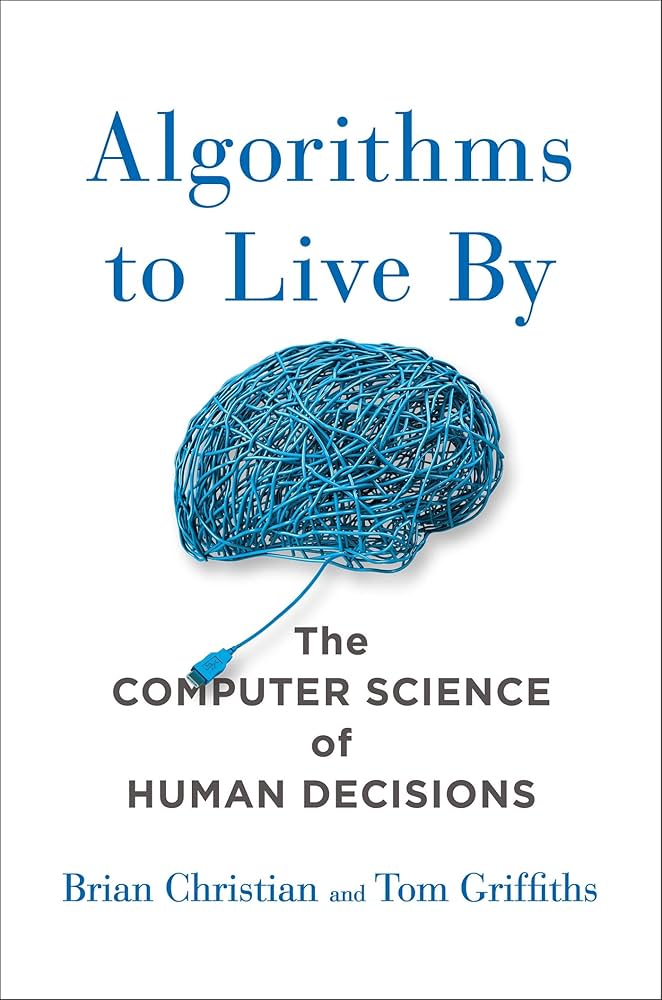
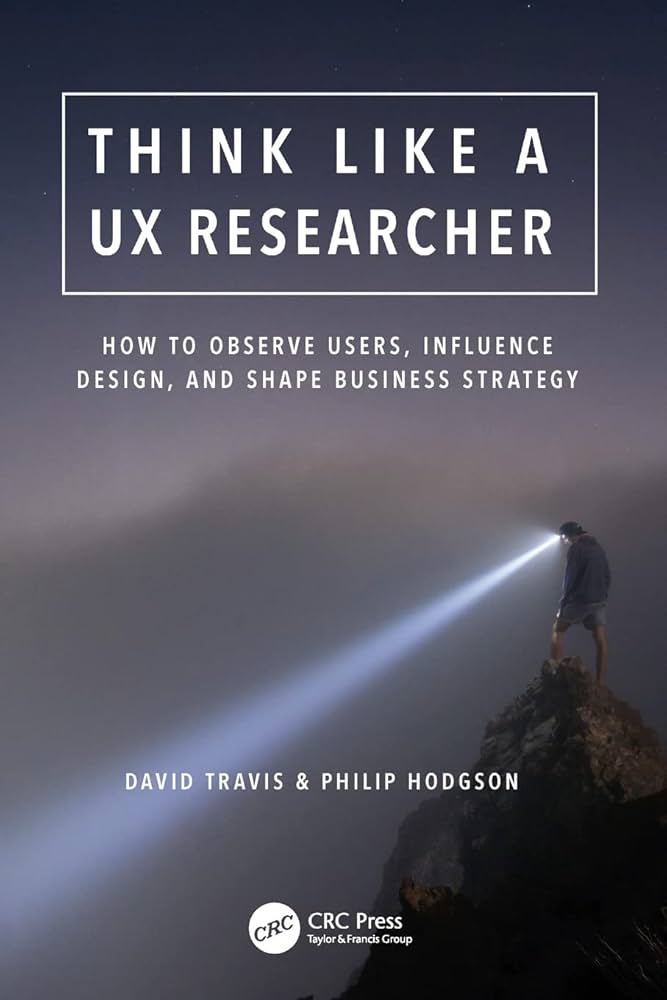
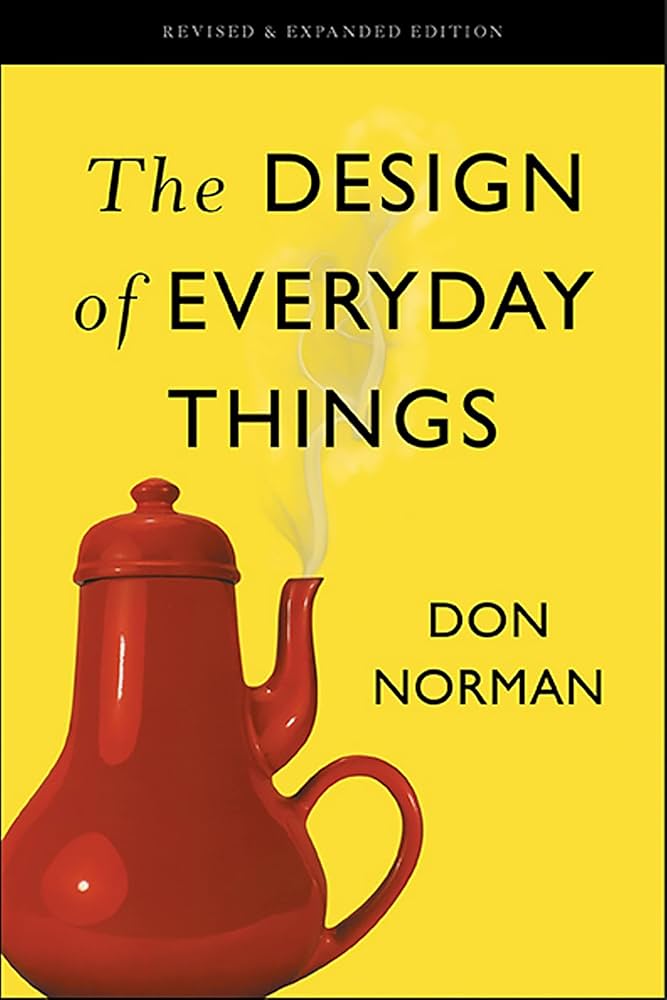
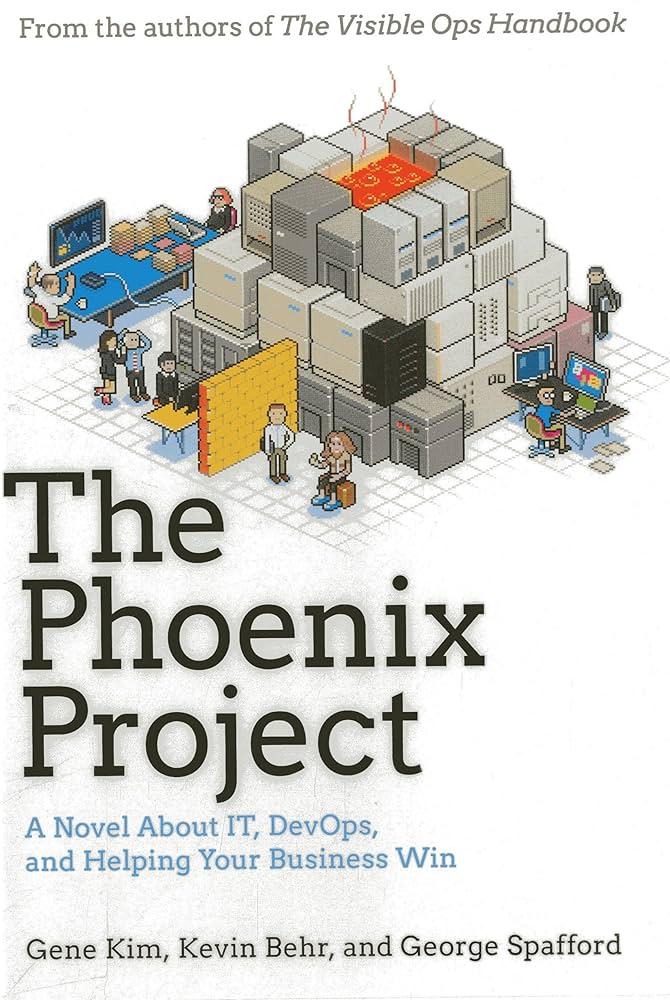
Some Books I recommend reading
TV Characters I Relate To

Ted Mosby
How I Met Your Mother (2005)

Richard Hendricks
Silicon Valley (2014)

Sheldon Cooper
The Big Bang Theory (2007) | Young Sheldon (2017)

Phil Dunphy
Modern Family (2009)

Gus Fring
Breaking Bad (2008)
Coffee & Story-Telling

Mumshad Nahiyan
Sep 22, 2025
What a time to be alive.
Are we already at the peak of information technology?
One question I’ve heard a lot over the past couple of years:
“Will AI take over our jobs?”
Personally, I don’t think so. AI won’t replace our jobs—it’ll just change how we do them. It’ll make things easier and faster, so we can focus on the work that really matters.
In fact, it might even create more jobs across industries.
Here’s a simple example from the past:
Back in the early 2000s, before WordPress or drag-and-drop builders were a thing, building a website was expensive and time-consuming. You had to know how to code, and even getting started took a lot of foundational knowledge.
Then came the no-code tools. People said, “Developers are done. Everyone can build websites now.”
But did developers disappear? Not at all. We just got new roles: WordPress Developers, Full-Stack Developers, Webflow Experts, and more.
Now back to AI.
What I believe AI is really going to change is how we get started with learning anything.
Remember those days when, as a beginner, you’d message someone asking, “How do I get started in your field?” and they’d never reply? Not because they’re rude—just busy.
Now, AI gives you those answers instantly. It points you in the right direction. It helps you ask better questions.
Yes, AI can hallucinate. But that’s only a problem when you expect it to do the task for you without knowing anything about it. If your goal is to learn—it’s a game-changer.
“You learn faster by asking the right questions.”
And AI helps you ask the right questions.
Quick personal story:
We incorporated BiTechX in Delaware back in 2023. As a foreign-owned SMLLC, taxes and accounting aren’t too complicated for BiTechX.
In the first year, we hired a CPA. I did the bookkeeping, and he prepared the documents—smooth process.
This year, I decided to do it all myself.
With the help of AI, it took me just one week of learning—something that would’ve taken at least a month otherwise. I started with basic questions. When I didn’t understand something, I asked more. Got references, read them, dug deeper.
And yep—I successfully filed the tax return myself this year. Even more thoroughly than last year.
Did AI replace the CPA? Not really. As things grow and get more complex, I’ll still rely on experts.
But now, I understand our finances better. I know how to scale smarter.
And all it took was a week.
This is the golden age of information.
AI isn’t replacing us.
It’s just making the starting line more accessible.
And that’s a win for everyone.
Mumshad Nahiyan
Oct 16, 2025
Did you ever realize that on Meta platforms, you swipe up to go to next reel, but you swipe right to go to the next story.
And, you swipe right on a reel ad to trigger the CTA, while you swipe up for it on a story ad?
This is a pretty interesting dark pattern in UX/UI (A combination of Misdirection and Roach Motel)
When you are subconsciously watching a story ad and think it’s a reel, you might accidentally swipe up to go to the next, but it would instead take you to the action page of the ad (Misdirection), and then when you are already there, you cannot simply swipe down to go back instead you would have to reach to the cross button on the top to exit to go back (Roach Motel).
And the similar happens when you are watching a reel and swipe right.
Each trigger of CTA gives them an opportunity to bill the advertisers, making them billions in the revenue. And the Roach Motel sometimes makes you actually take an action because you sometimes think “oh what’s there to lose”.
A lot of big companies take advantage of dark patterns in their designs. They make money out of your errors in action.
Mumshad Nahiyan
Oct 16, 2025
I’ve learned two amazing terms from Don Norman's book “Design of Everyday Things” that changed the way I think about designs and engineering.
The first one is “𝐀𝐟𝐟𝐨𝐫𝐝𝐚𝐧𝐜𝐞” and the second one is “𝐒𝐢𝐠𝐧𝐢𝐟𝐢𝐞𝐫”. Today I’ll share what I learned about affordance most simply.
Affordance means the ability or possibility to do a certain task or action.
Imagine you have coffee blends, milk, hot water, and a cup. It means you have the affordance to make a cup of coffee. But does that mean you want to make one now? No. But if you wanted, you could.
But imagine if you had everything except a cup, or maybe coffee blends. Would you have the affordance to make a cup of coffee? No. You could go shopping and buy those things to create affordance, but right now you don’t have affordance.
Controlling the user’s ability to do certain activities is a great way to make your designs work for the business objectives more precisely.
In Bangladesh, the Uber app does not provide the entire payable amount or mode of payment to the driver before the ride is completed. They lack the 'affordance' to see those particulars. Is there any technological constraint? Nope. Are there any ethical or moral inconsistencies? I don't believe so, at least not in Bangladesh. Why don't they show it if the majority of drivers are unhappy about it? Because it is a design choice, its availability on the driver's end may result in fewer connections. The drivers' behavioral resistance is being monetized. If a driver accepts a ride, they will assume that the manner of payment will not be cash (which they prefer), but this is not guaranteed. If they want to confirm, they must phone the customer, ask, and then forward if the selected payment option is not available. It takes a lot of effort to learn something that is often trivial. As a result, most drivers do not pursue it, resulting in more and faster connections.
I am sure most of you already knew about this practice, even the ones who didn’t know its name. Now you know the term too: Affordance.
Mumshad Nahiyan
Oct 16, 2025
This reminded me of 2011-13, when I was casually exploring different computer skills that intrigued me.
I was eager to learn different tools and technologies used in graphic design, web development, video editing, 3D modeling and many more. As a novice, of course I did not have a specific focus, I was curious to learn everything related to digital technologies.
But when I was reaching out to a few industry professionals for advice on “how to get started”, I was being ignored or receiving generic replies. Plus unlike now, there weren’t a lot of online mentors or courses/tutorials available. I had to learn the skills mostly through fiddling the apps, and had no one to ask for advices.
But later I realized my mistake, which most beginners do.
⚠️ I was not asking the right questions ⚠️
Asking a very generic and quite non-specific question to professionals will not get you a helpful answer, most of them will not bother to even reply.
Imagine if I ask a Software Engineer:
👉🏾 I am interested in software engineering. How can I get started?
VS
👉🏾 I was looking at the pros and cons between native apps and progressive web apps (PWA). I want to learn app dev, but unsure between native app and PWA. can you advice which skillset could be more demandful in future?
Now the 2nd question is a foolish question, I am sure software engineers will instantly realize that Mumshad is definitely not a SE otherwise he would not compare native apps vs PWA, not even in the name of an example. 😜 But at the same time they will know that I have done some research before reaching out to them.
While the 1st question is just an evidence that I am not serious, I didn’t even care to google, do research, or put bare-minimum effort. I am not a genuine learner, I am just here with an expectation that the person has unlimited time for me to write an essay explaining everything in the software engineering field and basically spoonfeed everything. That was not a foolish question, rather a question that screams that it’s not something I genuinely am interested to do.
Thanks to the advancement of internet and AI, now you can ask such non-specific questions to ChatGPT or even Google, and get helpful results which will lead you to find the skills you want to learn, and prepare some specific questions for your idols.
I hope this inspired you to learn how to ask the right questions about the skills you want to learn.
Mumshad Nahiyan
Oct 16, 2025
Canada visa story time!
Last year, sometime around July, my client Eric and I planned that I will visit Canada to strengthen our business collaborations.
I have gathered all the documents and applied for the business visitor visa, similar to how I did for the UK in past.
Not more than two weeks later, I got refusal letter. Reasons:
Not satisfied that I will return to my country, because:
1. Insufficient family tie
2. Business purpose does not sound legitimate
Really? Like I have been working with my client for 7 years!
Did some research on what should I do now, and figured out that after a refusal, before reapplying, it’s highly recommended to consult a Regulated Canadian Immigration Consultants (RCIC). I have found a few RCIC located in Bangladesh, and called one of them. It was mid August, and they have informed me that the earliest the RCIC can even have a paid consultancy session with me is September 20, because they are so busy with other clients.
But I need someone who will spend time on my case and give personalized solutions. That’s when I found out Arnika Visa, a Montreal based company, owned by RCIC MohammadReza Eslami. We had a consultancy session and I realized how weak my application was.
Later, together we built a stronger application and Reza applied on behalf of me. The 2nd application was submitted in the end of September. After 3 months, on December 27, I got refused again!
This time the reason was:
Not satisfied that I will return to my country, because:
1. Insufficient fund to finance the proposed travel
2. Travel purpose inconsistent with the type of visa I have applied.
Both Reza and I were shocked. We had such a strong application, and a lot of people with weaker profile get visas. Mr. Reza advised me to appeal to Canada federal court if I can afford it.
To be honest, at that point the visa was no longer something for me to must have. I would choose to not lawyer up against IRCC, but the 2nd refusal was kind of confusing. Like I have been earning for the last ten years and my savings is insufficient for a two weeks trip? Even masters students show way less for their two years plan. And the second reason was even more suspicious. I knew something was wrong.
Long story short, my lawyer convinced the IRCC lawyer that another visa officer would evaluate my application, and later, they gave me a visa. (I can’t share details of the case since it’s confidential.)
Throughout the whole process, one of the best parts is, I made a new friend in Montreal, Mr. Reza. He is an amazing businessman and we share a lot of business ethics. I hope his business grows bigger!
Mumshad Nahiyan
Oct 16, 2025
I usually don’t give financial advice, but I think this post will help you if you are someone my age who has a job or an income. All of these points are “taken from real life.” And what qualifies me to give this advice? Well, I’ve been earning since 2014, and these practices have been working pretty well for me, Alhamdulillah.
There are people in our city who can’t manage their lifestyle even with 300,000 BDT monthly earnings, while there are people who earn less than 6,000 and still survive just fine. So, for the advice below, you might argue that your income isn’t sufficient for you. But you can always cut down on things to make life affordable for yourself. So here are my thoughts:
1. Open a bank account if you don’t have one.
If you are still receiving payments in cash, stop right there and create a bank account. Ask your employer to pay directly through the bank. Evidence of income and a digital footprint are always important. A mature bank account will always speak for you when it comes to proving your solvency or good standing. Cash earnings leave no record. And when it comes to your bank statement, consistent cash flow is much more important than the ending balance.
2. Follow the 80/20 savings rule.
Every month, put aside 20% of your earnings for savings and use 80% for expenses. Many of you have the habit of thinking, “I have money in hand, let’s just spend it.” I completely understand that. To fight against this behavior, open a Deposit Pension Scheme (DPS) at your bank. The concept is simple: the bank deducts a fixed amount every month for a set period of time and then returns the total with interest at maturity. For example, if you earn 20,000 BDT monthly and open a DPS of 4,000 for 2 years, the bank will deduct 4,000 every month, and at the end of 2 years, you’ll get 96,000 + interest. This creates an external pressure that stops you from spending more than 16,000 per month. And if things go really wrong, you can always close a DPS before maturity by paying a small fee.
3. Use a Fixed Deposit (FDR) for large savings.
If you have a certain block of money saved (say 100,000 BDT) and you’re afraid you might spend it on something unnecessary, then open a Fixed Deposit (FDR). This prevents you from instantly accessing that money. It’s similar to government savings certificates, except the interest rate is lower. (Personally, I don’t care about interest since it’s haram, but if you do, savings certificates are more profitable.) The added benefit of an FDR is that you can get a credit card against it, which makes life more convenient (explained in the next point).
4. Get a credit card if your spending pattern makes sense.
If you spend more than 50,000 BDT a year at stores that accept cards, get a credit card. Most banks waive the annual maintenance fee if you spend above that threshold or make 20+ transactions. To avoid any interest charges, set your billing method to 100% auto-debit. That way, at the end of the month, the entire amount is deducted from your bank automatically. If I spend 50,000 in a year, I pay exactly 50,000 — no interest, no service fees.
Credit cards have two major advantages over debit cards or cash:
They are widely accepted for online purchases and EMI installments.
They serve as an instant short-term loan. For example, say your billing date is on the 10th of the month. It’s the 1st, you’re out of groceries, but your salary won’t arrive until the 5th. You can buy with your credit card without having balance in your account at that moment. As long as you refill your bank account before the 10th, you won’t pay a single penny in interest.
And that’s all for now. Hope this helps the young stars who have just started earning 😄
Mumshad Nahiyan
Nov 26, 2025
One of the biggest issues I have noticed in today’s job market, and one that few people talk about, is the growing mismatch between what professionals expect to earn vs the value their current skills bring to today’s market.
To be very honest, it often feels less rewarding to hire experienced professionals than freshers. This is not because all businesses want to save money, but because the world is changing faster than experience can always keep up.
For example:
A mechanic who spent 15 years working on combustion engines may have earned around three times more than a fresher. But as the industry moves toward electric vehicles, the systems and repair methods are completely different. When that person seeks a job to an EV service center, they often expect a similar salary, which is understandable given their lifestyle and comfort zone. Yet from the company’s view, hiring them is not very much different from hiring someone with no experience, except they are asking for 3x the salary.
Some professionals take short courses to stay relevant, but real proficiency takes time. In most cases, they cannot just claim themselves as "experienced" just because they have went through a crash course. Meanwhile, a fresher trained directly in EV systems may be more job ready and open to learning.
Too often, companies get villainized for not hiring or promoting experienced professionals. And while some businesses do act unfairly, many are simply caught in an impossible equation. It is not always about exploitation. Sometimes, it is about survival in a world that keeps moving faster than any of us can comfortably keep up with.
The hopeful part is that this gap can be bridged. Experienced professionals who stay curious, humble and keep learning become more valuable than ever. Those who resist change, even when the industry needs it, risk being replaced by fresh talent, or even worse, by an AI tool.
The future belongs to those who evolve (both professionals and businesses).
Interested To Collaborate?
If you send an email, please write full context so that I can prioritize getting back to you.